Indo Master

Sustainability aboard

How we reduce waste aboard and protect marine life on every dive.

Take nothing but photos. Leave nothing but bubbles.
Keep clear of the reef, give wildlife space and follow your guide’s instructions.

WHAT WE USE

Onboard practices

Soaps & cleaning products

  • Our natural soaps, conditioner, dishwashing liquid and laundry products are made in Bali.
  • We also make cleaners aboard using ingredients such as vinegar, olive oil, glycerin, alcohol and essential oils.
  • We use baking soda in the wetsuit rinse tank.
  • If you pee in your wetsuit, please rinse it in the shower instead of using the rinse tank.
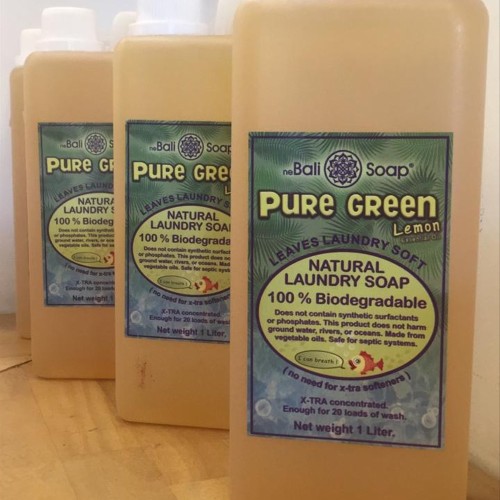
Bali-made laundry soap

FIVE BINS ABOARD

Sort your waste

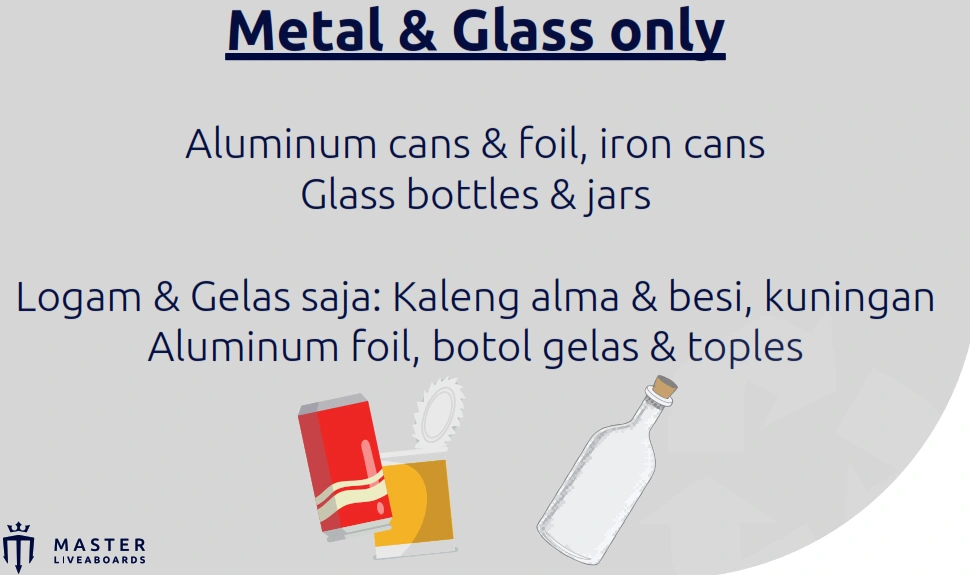
Metal & glass
Cans, aluminium foil, glass bottles and jars.
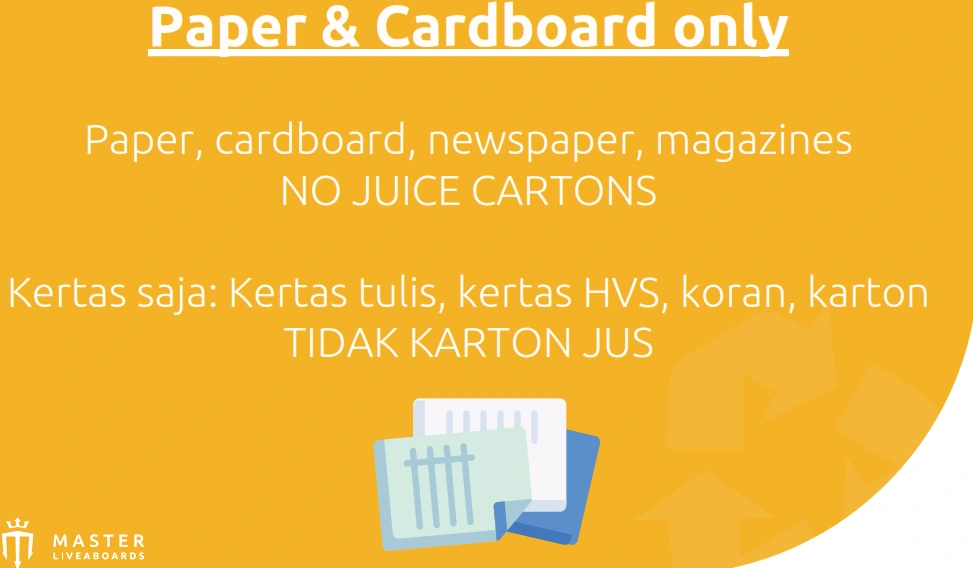
Paper & cardboard
Paper, newspapers, magazines and cardboard. Please keep tissues and juice cartons out of this bin.
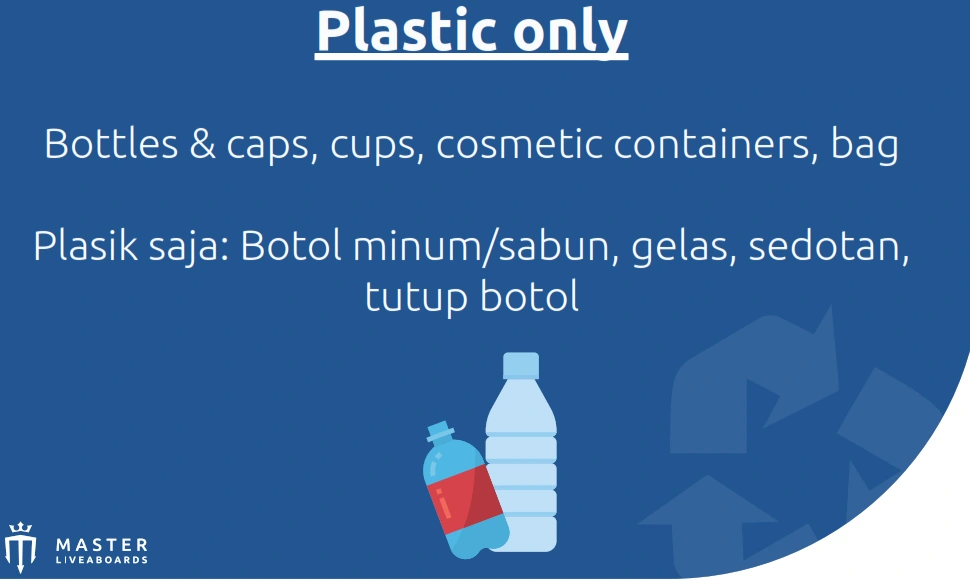
Plastic
Bottles and caps, cups, cosmetic containers and bags.
Organic
Food scraps and other organic waste.
Mixed waste
For items that do not belong in the other bins. Ask the crew if you’re unsure.

Take home hard-to-recycle waste you brought on board. This helps with items that are difficult to recycle locally, such as some plastic containers and batteries.

See the onboard bin signs
Open the metal and glass bin sign Open the paper and cardboard bin sign Open the plastic bin sign

CARING FOR OUR OCEANS

Our footprint

Carbon offsetting & plastic collection

Carbon offsetting 2025
40%
Carbon offsetting 2026
60%
Plastic collection 2026
1 tonne

Daily choices

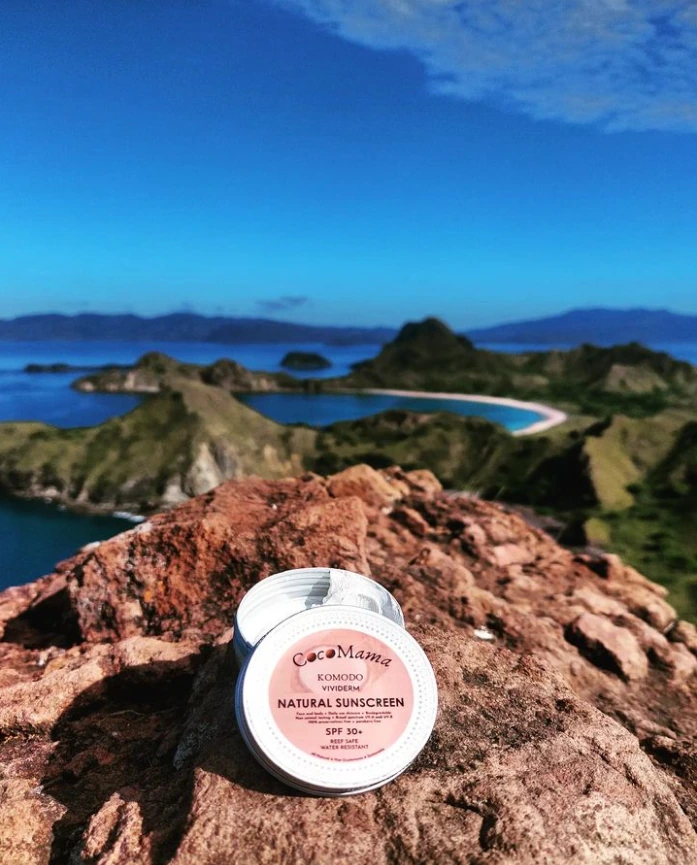
  • Use sunscreen labelled reef-safe before going in the ocean.
  • Our merchandise includes organic cotton, bamboo and recycled fibres.
  • We work to reduce food waste aboard.
A tin of sunscreen photographed overlooking a bay

GIVE MARINE LIFE SPACE

Reef etiquette

Keep clear of the reef

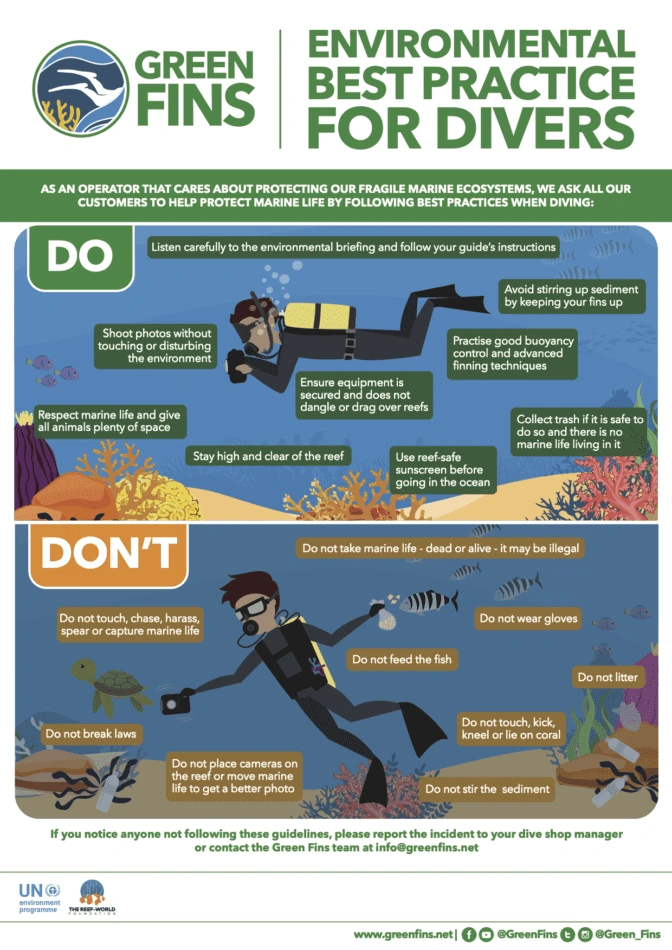
  • Maintain good buoyancy, keep your fins up and give coral, the seabed and animals plenty of space.
  • Secure your equipment so it cannot drag or knock against coral.
  • Do not touch, kneel, stand or rest on the reef. Do not use pointers or reef hooks.
  • Avoid gloves unless you need them for high skin sensitivity. Speak to your guide if unsure.

Leave animals undisturbed

  • Do not touch, chase or feed marine life. Never remove marine life, dead or alive.
  • Let divers without cameras or with smaller cameras go first. Point out the animal to the next diver.
  • Collect litter only if it is safe and no marine life is living in it.
  • If you see a problem, let the dive team know. The team may pull divers away from the reef or end a dive if contact continues.
Green Fins guide for divers Open the full-size Green Fins guide ↗ Green Fins Environmental Best Practice for Divers poster

NO SHOT IS WORTH DAMAGING MARINE LIFE

Underwater photography

Before you take a photo

  • Assess the situation before approaching. Stay aware of your surroundings.
  • Practise buoyancy, hovering and camera handling. Learn to fin slowly backwards.
  • Be careful where you point your torch on night dives.
  • Limit flash or strobe use to three shots per subject. Let divers without cameras or with smaller cameras go first.

Know when to back away

  • Do not fixate on one species, handle or chase animals, or crowd places like cleaning stations.
  • Do not hold on to coral, sponges or tunicates, or rest your camera on the reef.
  • Do not stir up sediment or move an animal for a photo.

MASTER LIVEABOARDS

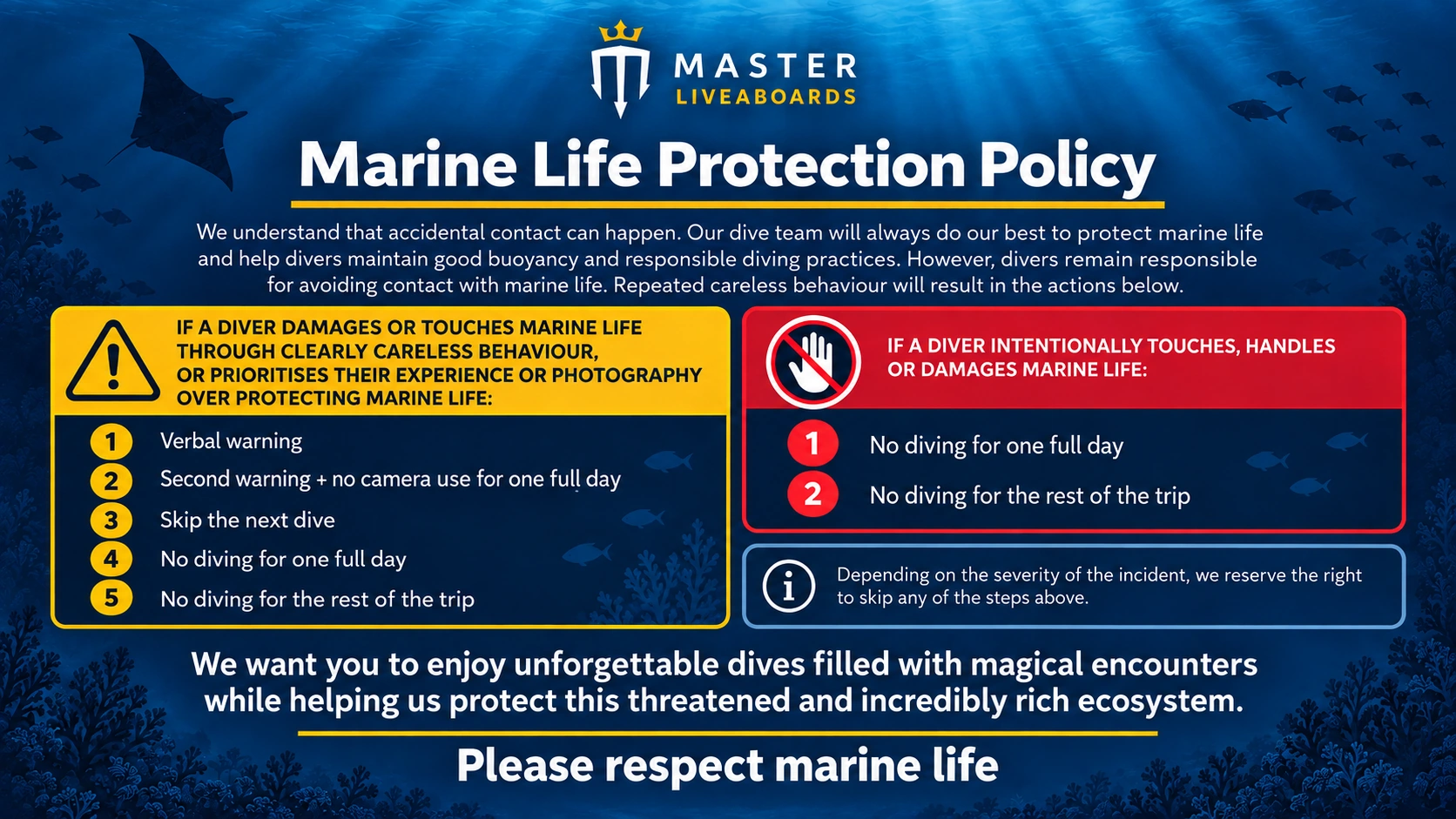
Marine Life Protection Policy

Accidental contact can happen. The dive team will help guests with buoyancy and responsible diving, and each diver is responsible for avoiding contact with marine life.

Careless contact or damage

If a diver touches or damages marine life through clearly careless behaviour, or puts photography or their own experience ahead of protecting it:

  1. Verbal warning.
  2. Second warning and no camera use for one full day.
  3. Skip the next dive.
  4. No diving for one full day.
  5. No diving for the rest of the trip.

Intentional contact or damage

If a diver intentionally touches, handles or damages marine life:

  1. No diving for one full day.
  2. No diving for the rest of the trip.

The dive team may skip steps depending on the severity of the incident.

Marine Life Protection Policy poster Open the full-size policy poster ↗ Master Liveaboards Marine Life Protection Policy poster. The full policy is also written above.